Germany Accelerates Rail Infrastructure Revival to Meet Climate Goals
Germany is undertaking a groundbreaking transformation of its rail network, repositioning itself as a leader in sustainable transportation. Historically plagued by outdated and underutilized rail lines, the country now advances towards a future where rail infrastructure plays a pivotal role in reducing carbon emissions and enhancing regional connectivity.
Strategic Expansion of Rail Lines: Unlocking Hidden Potential
The government’s ambitious plan, driven by insights from Allianz pro Schiene, aims to reconnect over 900 kilometers of abandoned or underused rail tracks by 2035. This strategic expansion goes beyond mere infrastructure growth; it signifies a comprehensive effort to shift freight and passenger traffic from road to rail, thus easing congestion and lowering pollution.
Reactivating Over 50 Routes: The Main Drivers
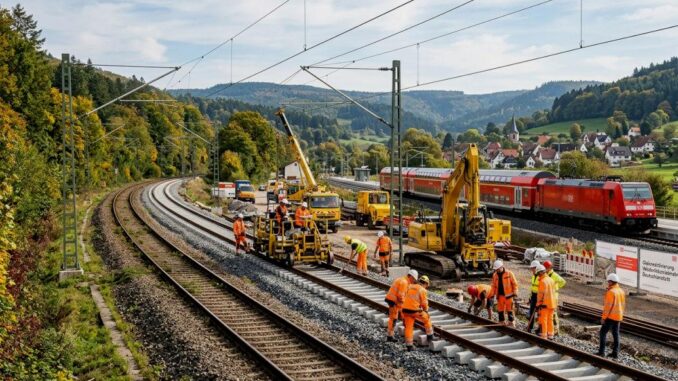
One of the most promising aspects of Germany’s rail revival pertains to the *reactivation of key routes*, with more than 50 routes expected to become operational within the next decade. Experts like Holger Krawinkel emphasize swift deployment, noting that approximately 300 kilometers of these projects are already nearing completion, partly due to streamlined approval procedures. This rapid progression illustrates an infrastructural revolution aimed at tangible, short-term outcomes.
Regional Leaders in Rail Reopening: A Tale of Diverging Progress
Different German states are advancing at varying speeds. Lower Saxony leads with 107 kilometers of enhanced rail lines, thanks to proactive regional planning and funding. Meanwhile, North Rhine-Westphalia (NRW) is making significant strides with 58 kilometers, and Bavaria has added 54 kilometers to its network. These regional efforts underline the decentralized yet unified push to modernize the entire rail system.
Funding Boost: From €1 Billion to €2 Billion, Catalyzing Growth
The backbone of this transformation is a substantial financial inflow. The Allianz pro Schiene reports the federal government’s commitment to increase funding from €1 billion to €2 billion, enabling faster and more extensive project rollouts. This financial empowerment supports state-level initiatives and incentives rapid project completion, making the railway renaissance a tangible reality.
Fostering Freight and Passenger Transport: A Dual Focus
The upgrade isn’t limited to passenger lines; freight corridors are equally prioritized. Projects like Worms-Kaiserslautern and Eifelquerbahn aim to establish critical freight routes that serve as alternatives to congested highways. These routes enhance logistics efficiency, reduce emission levels, and help Germany maintain its competitive edge in international trade.
Sustainable Transportation: Balancing Cost and Connectivity
Germany recognizes that sustainable transport requires more than just laying tracks. It involves optimizing operating costs, ensuring service quality, and balancing regional needs. Experts like Matthias Gastel and Lukas Iffländer stress the importance of increased regional funding from the federal government to keep these routes economically viable and operationally efficient.
Overcoming Challenges: Speeding Up Approvals & Cost Management
While progress is promising, delays in approval processes and escalating costs threaten to slow momentum. Streamlined planning procedures are critical. Governments must implement regulatory reforms that prioritize expedited approval without sacrificing safety or environmental standards, ensuring projects stay on schedule and within budget.
Impacts on Regional Development and Climate Goals
By reactivating and expanding rail lines, Germany accelerates its path towards climate neutrality. Efficient regional connectivity stimulates economic growth, especially in less-developed areas, fostering regional cohesion and making public transportation a practical choice for everyday commuters. The transition also supports urban development strategies aimed at reducing urban congestion and pollution.
Technology and Future-Ready Infrastructure
Modernization efforts include integrating digital signaling systems, electric train innovations, and smart infrastructure to enhance safety and efficiency. These technological upgrades prepare Germany’s rail network not only for today’s needs but also for future mobility trends, including high-speed trains and integrated multimodal transport systems.
Conclusion: A Model for Sustainable Infrastructure Redevelopment
Germany’s bold investment and strategic planning exemplify a comprehensive approach to transforming its railway infrastructure. This model showcases how targeted funding, regional collaboration, technological innovation, and a shared vision for sustainability can revolutionize a nation’s transportation landscape. As these projects unfold, they will significantly shape Germany’s economic and environmental future, setting benchmarks for global rail modernization efforts.