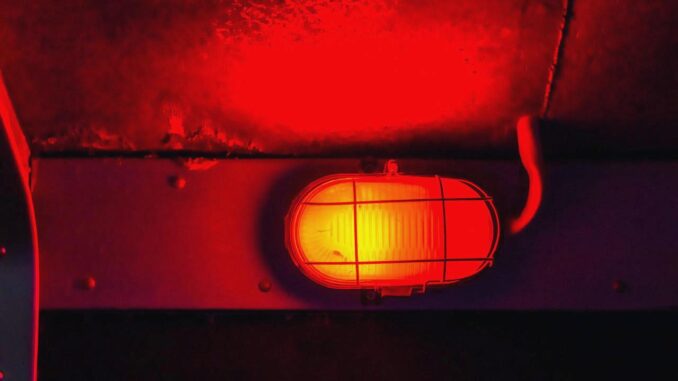
The Critical Role of Red Light in Submarine Operations and Nighttime Activities
Imagine spending months beneath the surface of the ocean, where the only light sources are carefully engineered illumination systems designed to optimize human performance and safety. Among these, red lighting plays a pivotal role. Its strategic use in submarines, military operations, and even environmental protection offers more than meets the eye. This article dives deep into why red light is not just a design choice but a carefully considered technological feature that enhances night vision, protects biological rhythms, and supports operational effectiveness.
Why Do Submarines and Night Operations Favor Red Lighting?
Red lights are used extensively in military submarines, nighttime military operations, and even in research settings for a simple reason: they preserve night vision. Unlike white or blue lighting, which can temporarily impair human eyesight’s ability to adapt to darkness, red light offers the benefit of minimal disruption. This preservation of natural night vision ensures personnel can quickly switch between lit and dark environments, a necessity during emergencies, covert missions, or maintenance tasks.
The Science Behind Red Light and Human Night Vision
Our eyes contain two types of photoreceptor cells: rods and cones. While cones handle color perception during the day, rods are responsible for vision in low light. Interestingly, rods are less sensitive to red wavelengths, which means that exposing oneself to red light does not activate rods as strongly as white or blue light. This allows us to maintain optimal night vision, with our eyes staying adapted to darkness.
When a person is exposed to white or bright light, rods temporarily stop functioning, leading to a state called light adaptation. Transitioning back to darkness can take up to 40 minutes because the photopigment called rhodopsin needs to regenerate. Red light, however, doesn’t cause this disruption, making it invaluable for preserving visual sensitivity in dark environments.
Rhodopsin and Its Role in Night Vision
Rhodopsin is a visual pigment found in rods that is responsible for our ability to see in dim lighting. When exposed to bright white light, rhodopsin molecules break down, reducing night vision temporarily. Conversely, red light leaves rhodopsin largely unaffected, maintaining night vision capabilities. This feature is critical in submarine operations, where crew members often need to move between illuminated and dark sections without losing their ability to see in darkness.
Application of Red Light in Military and Scientific Fields
Beyond submarines, red lighting finds extensive use in various fields:
- Military Night Operations: Soldiers and operators use red light to read maps, handle equipment, or communicate while preserving night vision.
- Astronauts and Astronomers: Red lighting ensures accurate observations without interfering with telescopic equipment or celestial observations.
- Environmental Conservation: Red red lights are employed to minimize disturbance to nocturnal animals, such as bats, sea turtles, and marine mammals—all of which rely heavily on natural light cues for navigation and survival.
- Medical and Beauty Industry: Red light therapies, popular in skin treatment, leverage the same principle—using specific wavelengths to stimulate cellular activity without hampering overall biological processes.
Benefits of Red Lighting in Maintaining Biological Clocks
Our biological clock, or circadian rhythm, regulates sleep-wake cycles and other bodily functions. Disruption of this rhythm, especially for personnel working in enclosed environments like submarines, can lead to fatigue, reduced performance, and health issues.
By employing red lighting during nocturnal shifts, operators minimize the disturbance to their circadian systems. This artificial dusk-like environment helps replicate natural night conditions, supporting better sleep patterns and overall well-being.
Practical Steps for Implementing Red Light Strategies
- Choose appropriate wavelength: Typically, red LEDs emit light at around 620-750 nanometers, which is optimal for night vision preservation.
- Use focused, directional lighting: Minimize light spills to avoid illuminating surrounding areas unnecessarily.
- Limit exposure duration: Keep interactions with red light as brief as possible to optimize night vision adaptation.
- Integrate with existing systems: Ensure red lighting interfaces seamlessly with other operational equipment and protocols.
Future Perspectives and Innovations
Research continues to explore how different wavelengths can further enhance night vision and biological health. Developments include smart lighting systems that switch seamlessly between wavelengths based on activity and time of day, as well as advances in low-impact environmental lighting to protect ecosystems from light pollution.
The strategic use of red light not only exemplifies advanced human engineering but also demonstrates how a simple wavelength choice can significantly impact safety, health, and operational efficiency across disciplines. Whether protecting marine life, supporting military missions, or preserving human night vision, red lighting remains an indispensable tool in the arsenal of darkness management.