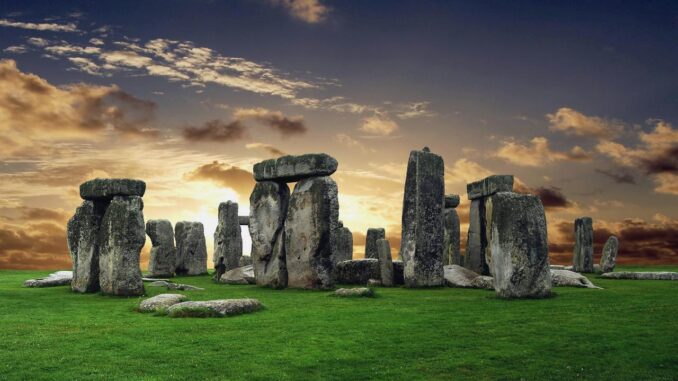
At the intersection of archaeology, engineering, and human ingenuity lies Stonehenge, the prehistoric monument that has baffled scholars and tantalized visitors for over 4,500 years. Its massive stones, painfully transported and arranged with astonishing precision, hint at a sophisticated society with advanced knowledge of astronomical alignments, engineering prowess, and social organization. Today, recent discoveries shed new light on how this iconic structure was built, challenging traditional narratives and revealing the depth of ancient human ambition.
## The Origin and Construction of Stonehenge Stonehenge’s construction spans several phases, beginning around 3000 BCE during the late Neolithic period. The site comprises massive sarsen stones and smaller bluestones, each originating from distinct locations, separated by hundreds of kilometers. The precise purpose of the monument remains debated, but prevailing theories suggest roles in ceremonial practices, solar and lunar observations, or territorial markers. ### The Journey of the Stones Transporting and erecting these stones without modern technology exemplifies monumental human effort. Recent breakthrough analytical work reveals that ancient builders employed a combination of natural topography, wooden sledges, and rolling logs to move the stones over rugged terrain. For example: – Sarsen stones likely traveled approximately 30 kilometers from the Marlborough Downs. – Bluestones originated from the Preseli Hills in Wales, roughly 200 kilometers away. Transport methods involved complex logistical arrangements, including the use of river routes and strategic staging areas, demonstrating an intricate understanding of transportation and resource management. ### Engineering and Erection Techniques Contrary to earlier beliefs that large stones were simply levered into position, recent experiments indicate a sophisticated understanding of counterweights and ramp systems. Archaeologists believe that the builders leveraged a combination of earthen ramps and wooden frameworks, aligning stones with celestial events such as solstices. ## Astronomical Alignment and Calendar Significance One of the most compelling features of Stonehenge is its precise alignment with astronomical phenomena, notably the summer solstice sunrise and the winter solstice sunset. This suggests its function extended beyond ceremonial use to serve as a prehistoric astronomical observatory, helping ancient communities mark seasonal changes vital for agricultural practices. – Solar orientation: The axis of the stones aligns with the midsummer sunrise. – Lunar cycles: Some alignments correspond with lunar standstills, indicating a complex calendrical system. This calendar integration demonstrates an advanced understanding of celestial movements, positioning Stonehenge as a monumental astronomical observatory built with remarkable precision using primitive tools. ## Cultural and Ritual Significance The convergence of astronomical alignment, construction effort, and burial findings imply that Stonehenge was a focal point for social cohesion, ritualistic ceremonies, and perhaps the manipulation of spiritual or cosmic power. Excavations reveal that surrounding areas housed burials and ceremonial precincts, underlining its role as a spiritual hub. – Ritual activities: Conducted during solstices, involving large gatherings. – Burials: Remains of individuals from different eras suggest continuous use over generations. Recent research suggests the monument may also symbolize political authority, unifying diverse groups through shared ritual practices tied to astronomical cycles. ## Recent Discoveries Reshape Our Understanding Innovative archaeological techniques, including geochemical analysis and 3D modeling, have revolutionized knowledge about Stonehenge: – Origin of the stones: Recent studies confirm the Welsh origins of the bluestones, with seasonal transportation likely involving waterways. – Construction chronology: Precise dating techniques reveal complexities in construction phases, implying a long-term project spanning several centuries. – Community involvement: Evidence points to a large, organized workforce, possibly involving specialized craftsmen. These breakthroughs suggest that Stonehenge was not merely a static monument but a dynamic landscape of social, religious, and technological innovation. ## The Modern Legacy of Stonehenge Today, Stonehenge endures as a symbol of human achievement, inspiring ongoing archaeological exploration, cultural festivals, and academic inquiry. Its enduring appeal lies in the universal human quest to understand our origins, universe, and the collaborative efforts of our ancestors to shape a legacy that continues to mystify and awe. Understanding the meticulous effort, astronomical precision, and cultural importance behind Stonehenge transforms it from an enigmatic pile of stones to a testament of early human ingenuity and social complexity.