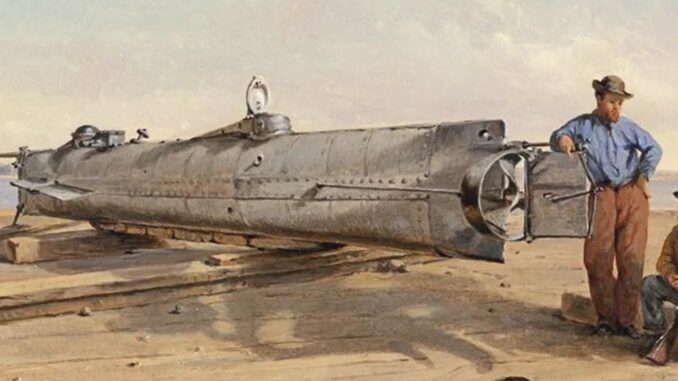
The Forgotten Tragedy of the H.L. Hunley
Among the most astonishing stories in military and maritime history, the sinking and mysterious demise of the H.L. Hunley submarine during the American Civil War remains a haunting mystery. Built as a revolutionary ironclad submarine aimed at changing naval warfare, the Hunley’s tragic fate highlights the extreme perils faced by early submariners and the brutal reality of underwater combat.
The Significance of the Hunley in Naval Warfare
The H.L. Hunley stands out as the first submarine to successfully sink an enemy ship in combat. On February 17, 1864, during the tense blockade of Charleston harbor, it managed to penetrate enemy defenses and strike a blow to the Union’s naval efforts by sinking the USS Housatonic. This dangerous mission, however, came at a horrific cost, as the submarine and all eight crew members disappeared in the depths.
The Mysterious Disappearance and Discovery
For over a century, the fate of the Hunley’s crew remained shrouded in mystery, fueling speculation and legendary tales. It wasn’t until 1995 that the wreck was finally discovered off the coast of South Carolina. Surprisingly, the submarine appeared almost untouched, with its crew still sitting at their posts, as if frozen in time.
What the Wreck Revealed About the Tragedy
Analysis of the preserved wreck revealed chilling details. The crew members were found in their seats, implying that they died instantly during a catastrophic event. Extensive research and modern forensic tests aimed to understand how such a disaster could occur with the crew seemingly unaware or unable to escape.
The Physics Behind the Explosion
Researchers from Duke University and other institutions turned to physics to crack the enigma. They determined that the Hunley’s fatal blow resulted from a 135-kilogram explosive charge designed to sink the Union vessel. The explosive was positioned on a spar about five meters long protruding from the submarine, which dramatically increased the power of the blast underwater.
The Role of Underwater Shockwaves in the Catastrophe
The explosion generated a massive shockwave that travelled through the water, exerting enormous pressure on the hull of the Hunley. This pressure shattered the metal walls, causing lethal injuries to the crew. They likely experienced a brutal, rapid death, with reports suggesting their lungs and brains suffered catastrophic damage from the force of the blast.
Biophysical Research and Modern Forensic Evidence
Bioscientific experiments replicated shockwave impacts similar to those experienced during the Hunley’s explosion. These studies concluded that the crew members probably drowned or succumbed from internal injuries caused by the rapid pressure changes. The fact that they remained seated implies they did not have a chance to evacuate or realize the danger in time.
Implications for Military History and Naval Engineering
This tragic event underscores the early risks of submarine technology, which was still in its infancy. It also highlights how engineering limitations and incomplete understanding of underwater explosions contributed to such disasters. Modern submarine safety measures and design improvements owe much to lessons learned from incidents like the Hunley’s sinking.
Conclusion: A Pioneering Yet Fatal Endeavor
The H.L. Hunley’s story embodies the perilous pioneering spirit of early submarine warfare. It demonstrates both human ingenuity and the deadly risks of underwater combat. By unraveling the physics and forensic evidence behind its sinking, researchers continue to honor the crew’s bravery and deepen our understanding of naval history’s most mysterious tragedies.