Revolutionizing Infrastructure: China’s Underwater Yangtze River Tunnel Achieves Historic Milestone
In an extraordinary feat of engineering, China has completed one of the world’s most ambitious and technologically advanced underwater tunnel projects beneath the mighty Yangtze River. This revolutionary infrastructure not only shortens travel times significantly but also sets new standards in tunnel construction under challenging geological conditions.
Why This Tunnel Is a Game-Changer in Modern Transportation
Strategically located in Jiangsu Province, this tunnel connects the north and southern regions of China, facilitating seamless travel and boosting regional integration. Designed to stand with the high water pressure and complex geology of the riverbed, the tunnel endured a grueling construction process that pushed engineering boundaries.
Technical Innovations That Power the Yangtze River Underwater Tunnel
- Giant Tunnel Boring Machine (TBM) ‘Linghang’: This 15-meter diameter machine spearheaded the excavation, utilizing cutting-edge technology to navigate through tough geological layers with precision and safety.
- Advanced Sealing and Reinforcement Systems: Engineers implemented innovative sealing techniques to prevent water ingress, ensuring the long-term structural integrity of the tunnel.
- Real-Time Monitoring: Equipped with sensors that track geological movements in real time, allowing engineers to respond promptly to any anomalies during construction.
Construction Process: Step-by-Step Breakdown
- Site Preparation: Survey teams conducted detailed geological assessments to plan the excavation route meticulously.
- TBM Deployment: The massive ‘Linghang’ TBM was transported and assembled at the launch site with precision engineering.
- Excavation: The TBM methodically carved through the earth, with real-time data guiding adjustments in speed and direction.
- Segmental Installation: As the tunnel segment progressed, prefabricated concrete segments were quickly installed to reinforce the structure.
- Waterproofing and Final Reinforcement: Engineers applied specialized waterproof membranes and internal supports to enhance durability.
- Testing and Safety Checks: Before opening, the tunnel underwent rigorous testing for safety, stability, and speed capacity.
Engineering Challenges Overcome During Construction
- High Water Pressure: The tunnel lies approximately 89 meters beneath the riverbed, requiring innovative pressure management techniques.
- Complex Geology: Unpredictable geological formations demanded adaptive engineering solutions and flexible project management.
- Environmental Concerns: Strict environmental protocols were implemented to minimize ecological impact, including water quality preservation and habitat protection.
Impact on China’s Modern Transportation Network
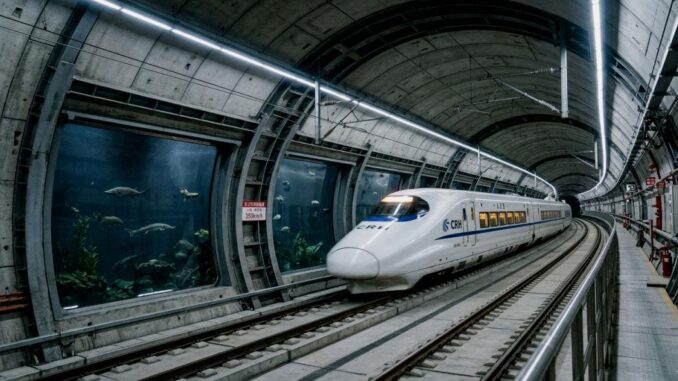
The completed Yangtze River undersea tunnel dramatically enhances the interconnectivity of China’s rapid transit system. Trains traveling at speeds up to 350 km/h now cross beneath the river, cutting travel time by more than half compared to conventional routes. This development accelerates economic growth, promotes regional integration, and exemplifies China’s mastery of large-scale engineering projects.
The Future of Underwater Tunnel Engineering Globally
China’s successful execution of this project signals a new era in underwater tunnel engineering that will influence global standards. The innovative use of TBMs like ‘Linghang’ and the technological solutions devised to combat high water pressure and complex geology set a benchmark for future projects worldwide.