The Jintang Undersea Tunnel: A New Era in High-Speed Rail Connectivity
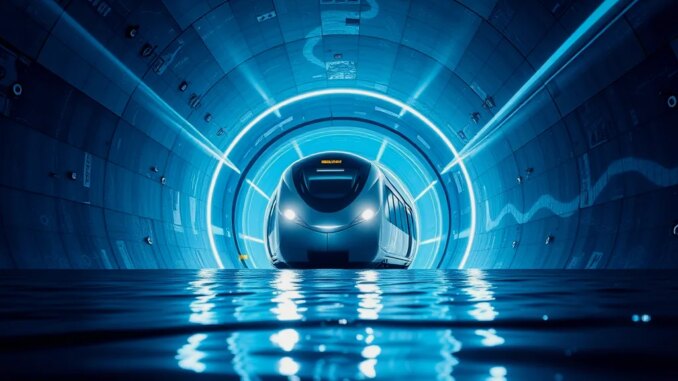
China has achieved a remarkable engineering feat with the completion of the Jintang Undersea Tunnel, now set to become the world’s longest underwater high-speed rail tunnel. This project signifies a monumental advancement in undersea infrastructure, promising to revolutionize transportation between Ningbo and Zhoushan, two of China’s rapidly developing economic hubs. From meticulous planning to cutting-edge construction techniques, this tunnel embodies China’s commitment to innovation and connectivity, offering a glimpse into the future of high-speed rail travel.
Why the Jintang Undersea Tunnel Represents a Major Leap in Infrastructure
The tunnel bridges geographic and logistical gaps that have recently hindered efficient movement between Ningbo and Zhoushan. Prior to its construction, travelers relied on ferries or road routes that could be time-consuming and weather-dependent. Now, with the completion of the tunnel’s land segment, an efficient, high-capacity transit route is opening up, significantly reducing travel times and increasing freight and passenger movement capacity. This infrastructure will bolster local economies, facilitate trade, and promote tourism in the region.
Engineering Marvel: Specifications and Design Features
- Maximum Length: 16.18 kilometers, making it the longest undersea high-speed rail tunnel globally.
- Design Speed: 250 kilometers per hour (155 miles per hour), enabling rapid transit between the two points.
- Construction Techniques: Utilized tunnel boring machines (TBMs) specially adapted for undersea conditions, coupled with advanced waterproofing and seismic resilience measures.
- Sections: Comprises both underwater and terrestrial segments, with the land portion spanning 7.83 kilometers.
These features combine to create a tunnel that is not only long but also resilient, safe, and capable of supporting high-speed transit in challenging underwater conditions.
Progress and Current Status of the Project
The land-based segment of the Jintang Tunnel has been successfully completed, marking a critical milestone. This phase involved excavating and reinforcing the terrestrial sections, integrating advanced tunneling machinery, and ensuring seamless connection points for future operations. With the land segment finished, engineers are now focusing on finishing the underwater tunnel, completing safety testing, and integrating the rail systems.
Impacts on Regional Development and Economy
This infrastructure will significantly boost regional development in several ways:
- Reduced Travel Time: The high-speed rail connection reduces journey times dramatically, facilitating daily commuting and business trips.
- Trade Enhancement: Faster freight transit accelerates supply chains, lowering transportation costs and opening new markets.
- Tourism Growth: Easier access to Zhoushan’s scenic spots and cultural sites will attract more visitors, stimulating local economies.
- Urban and Rural Connectivity: Bridging urban centers with semi-rural areas promotes balanced regional growth.
Future Outlook and Expected Benefits
Once operational, the Jintang Undersea Tunnel will set new standards for undersea high-speed rail infrastructure globally. It will serve as a blueprint for similar projects worldwide, demonstrating that undersea tunnels can sustain high-speed rail operations efficiently and safely. Expected benefits include:
- Increased Capacity: Handling thousands of passengers daily, alleviating road congestion.
- Sustainable Transportation: Support for environmentally friendly transit options, reducing carbon emissions.
- Technological Innovation: Pushing forward engineering, safety, and operational standards in underwater tunnel construction.
Conclusion
The completion of the Jintang Undersea Tunnel stands as a testament to China’s innovative spirit and engineering prowess. By seamlessly connecting Ningbo and Zhoushan through this monumental undersea passage, China paves the way for a future where rapid, safe, and sustainable high-speed rail travel becomes a global norm. As this project exemplifies, infrastructure development is not just about connecting places but forging a resilient and prosperous future.
Frequently Asked Questions (FAQs)
What makes the Jintang Undersea Tunnel the longest of its kind?
Its total length of 16.18 kilometers, combined with the high-speed rail design, establishes it as the world’s longest undersea high-speed rail tunnel.
When will the tunnel become operational?
Once final safety tests and system integrations are complete, expected to be within the next few months, it will be open for regular high-speed rail services.
How does this tunnel compare to other underwater tunnels worldwide?
It surpasses existing tunnels in length and speed capacity, showcasing technological advancements in submarine tunnel construction and high-speed rail design.
What are the safety features incorporated into the tunnel?
The tunnel includes seismic isolation, waterproofing layers, emergency evacuation routes, and advanced monitoring systems to ensure maximum safety during operation.