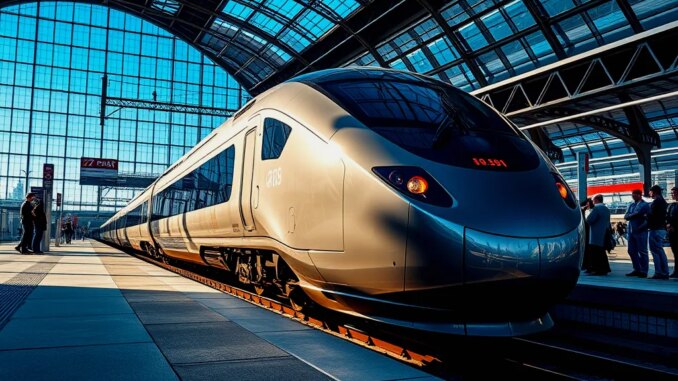
Experience the New Era of Convenient, Fast, and Direct Rail Travel
Imagine arriving at a bustling airport, only to find that your train connection seamlessly takes you from a vibrant city in Germany directly to the heart of Belgium’s international gateway — Brussels Airport. This isn’t a far-fetched dream anymore; it’s now a reality after over a decade of downtime. The renewed high-speed rail service linking Cologne and Brussels Airport redefines how travelers navigate across borders, combining speed, comfort, and practicality in one experience.
Unveiling the Reinstated High-Speed Line: Cologne to Brussels Airport
As of this year, the connection between Cologne and Brussels Airport has been revitalized, featuring two daily roundtrip services that cater to both leisure and business travelers. This connection offers a swift and direct route—avoiding prolonged layovers or multiple transfers—that emphasizes the importance of efficient European travel networks.
Departure times from Cologne are strategically scheduled at 06:11 AM and 04:28 PM, enabling travelers to align their journey with flight schedules or business commitments. The train traverses cities such as Aachen, Liège, and Leuven, showing the rich tapestry of cultural and economic hubs along the route.
How Does This New Connection Benefit Travelers?
- Time Efficiency: The entire trip from Cologne to Brussels Airport takes approximately 2 hours, significantly reducing travel time compared to car or bus options, which could extend beyond three hours depending on traffic.
- Comfort and Convenience: Passengers enjoy modern high-speed trains equipped with amenities—Wi-Fi, spacious seating, and onboard facilities—that make the journey relaxing and productive.
- Direct Access to the Airport: The train halts directly at Brussels Airport station, eliminating the need for additional transport. Travelers can check-in, relax, or make last-minute preparations without stress or delay.
- Seamless Cross-Border Travel: Thanks to streamlined scheduling, passengers crossing the border benefit from synchronized connections that minimize wait times, even when transitions occur at different transit points.
Strategic Schedule and Connectivity Metrics
Let us analyze the timetable’s strategic design:
| Departure from Cologne | Arrival at Brussels Airport | Return Trip from Brussels | Arrival in Cologne |
|---|---|---|---|
| 06:11 | 08:29 | 11:29 | 13:47 |
| 16:28 | 18:46 | 14:29 | 16:47 |
This schedule guarantees at least two daily trips in both directions, covering peak travel times and accommodating different traveler needs — from early morning departures to late afternoon returns.
Enhanced Intermodal Connectivity: The Future of European Travel
One of the most significant innovations here is the integrated booking system that combines train and flight reservations Travelers now have the opportunity to purchase a single ticket encompassing both modes of transportation, streamlining the entire journey. This approach not only reduces administrative hassle but also ensures tighter schedule alignment — minimizing risks of missing flights or train connections due to delays.
For instance, a passenger booking a trip from Cologne to New York via Brussels Airlines can now include a train segment within their flight reservation. If a train is delayed, their airline ticket is adjusted accordingly, guaranteeing a smoother travel experience.
Addressing Delays and Ensuring Reliability
To safeguard passengers against unforeseen delays, the service incorporates a ‘connection guarantee.’ If a train delay causes a missed flight connection, passengers are entitled to rebooking without additional charges, backed by cooperation between Deutsche Bahn and Brussels Airlines. This proactive measure underlines the commitment to passenger satisfaction and reliable service standards across borders.
Impacts on Regional Economies and Passenger Behavior
The revival of this route doesn’t merely serve individual travelers; it profoundly impacts regional economies. It encourages cross-border commerce, tourism, and cultural exchanges by making the journey more accessible and less time-consuming. Local businesses in Aachen, Liège, Leuven, and Brussels stand to benefit from increased foot traffic and enhanced economic activity.
Moreover, the ease of travel incentives travelers to choose rail over air for short to medium distances within Europe, aligning with sustainability goals and reducing carbon emissions, which is a growing priority among environmentally conscious travelers.
Conclusion: A Historic Step Forward in European Connectivity
The return of the high-speed train linking Cologne with Brussels Airport symbolizes a pivotal advancement in European transportation. It reflects a strategic investment in infrastructure aimed at fostering easier, faster, and greener travel options. Whether for business, leisure, or international connections, travelers now have an invaluable route that saves time and energy while bridging two significant urban centers.
As the service stabilizes and expands, expect more seamless integrations, increased frequency, and further expansion to neighboring regions. This is more than a train route; it’s a new corridor for European unity, efficiency, and sustainable growth.
Frequently Asked Questions
How long does the train from Cologne to Brussels Airport take?
The journey typically lasts around 2 hours, making it one of the fastest options for cross-border travel in the region.
Can I buy a combined ticket for train and flight?
Yes, integrated booking options are available, allowing you to purchase train and flight tickets in a single transaction, simplifying your travel planning.
What are the advantages of this new rail service?
- Significant time savings compared to car or bus
- Direct access to Brussels Airport station
- Higher comfort and onboard amenities
- Enhanced cross-border connectivity with synchronized schedules
Is the train service available every day?
Yes, the route operates twice daily in both directions, covering typical travel peaks and offering flexibility for travelers.