Revolutionizing Fuel Logistics with State-of-the-Art Railway Infrastructure
Poland’s leading fuel infrastructure operator, PERN, has launched a groundbreaking railway terminal at Nowa Wieś Wielka, near Bydgoszcz. This strategic upgrade signifies a major leap forward in the country’s energy logistics, drastically transforming the way fuel is distributed across northern Poland. The new terminal doesn’t just increase capacity—it redefines efficiency, sustainability, and security for Poland’s energy supply chain.
Unmatched Capacity and Efficiency in Fuel Handling
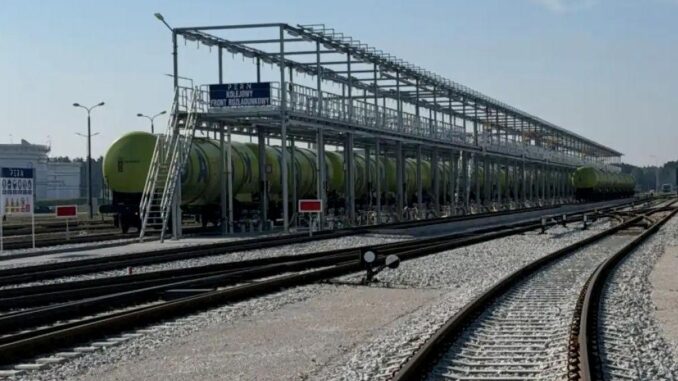
The terminal’s most remarkable feature is its ability to unload 36 tanker wagons simultaneously. This capability reduces turnaround time dramatically, allowing for faster dispatch and delivery of critical fuel supplies. Each of the 42 unloading points is equipped with advanced technology to ensure secure and swift transfer of a variety of fuels, including petrol, diesel, and specialty products.
This efficiency gain is a direct response to growing demand for rapid fuel distribution, especially given Poland’s strategic importance in regional energy security. Operational speed not only benefits logistics companies but also significantly impacts fuel availability during peak periods, emergencies, or disruptions in other supply routes.
Next-Generation Infrastructure with Extended Rail Network
The upgrade goes beyond just increasing capacity. The 3.5-kilometer new railway line constructed within the depot enhances maneuverability for incoming and outgoing wagon sets. This complex infrastructure enables seamless integration with existing rail networks, reducing idle times and congestion at nearby rail crossings.
Moreover, the entire infrastructure prioritizes safety, automation, and environmental compliance. Modern sensors and control systems ensure precise operations, minimizing risks associated with fuel handling. These features position the depot as a future-proof hub capable of adapting to evolving energy needs and technological advancements.
Building a Sustainable and Future-Ready Fuel Supply Chain
Poland’s strategic focus on sustainability finds a significant ally in this new terminal. The infrastructure’s design opens possibilities for handling alternative fuels, such as HVO biodiesel and hydrogenated vegetable oils. These options are vital as the country transitions towards a cleaner energy landscape, aiming to reduce carbon emissions and meet EU sustainability targets.
The integration of these green fuels requires flexible infrastructure capable of managing different chemical and physical properties safely. The new terminal is constructed with this flexibility in mind, featuring modular components that can be upgraded or adapted as fuel technologies evolve.
Implications for Poland’s Energy Security and Economic Resilience
By doubling the capacity of fuel transport via rail and reducing dependency on road-centric logistics, Poland significantly enhances its energy independence. Rail transport is inherently safer, more environmentally friendly, and capable of handling larger volumes with less congestion compared to trucks, which translates into economic benefits.
In addition, this development aligns with broader European energy security strategies, positioning Poland as a key logistics hub for Central and Eastern Europe. It ensures that the country can better stand with supply disruptions, market volatility, or geopolitical tensions that might affect traditional transport routes.
Why This Matters for Consumers and Industry Stakeholders
For everyday consumers and industrial players alike, this means more reliable fuel supplies and potentially lower prices over time. The improved logistics infrastructure reduces supply bottlenecks and enhances transparency in distribution channels.
Industrial sectors, especially transportation, manufacturing, and logistics companies, benefit from increased operational flexibility. They can plan with greater certainty, knowing that fuel availability and transfer speeds are significantly enhanced.
Conclusion: Setting New Standards in Fuel Logistics
This expansion at Nowa Wieś Wielka exemplifies how strategic infrastructure investments can transform national energy systems. With capacity doubled, advanced technology integrated, and future fuel types accommodated, Poland positions itself as a regional leader in sustainable, secure, and efficient fuel logistics. This project isn’t just an upgrade—it’s a blueprint for modern energy infrastructure that balances immediate needs with long-term sustainability goals.