Russia Accelerates into the Future of High-Speed Rail
Russia is embarking on an ambitious journey to revolutionize its transportation infrastructure with the development of a cutting-edge, high-speed rail line connecting Moscow and Sankt-Peterburg. This project not only signifies a leap in technological advancement but also underscores Russia’s commitment to becoming a leader in efficient, modern transit solutions. The initiative promises to drastically cut travel times, boost economic connectivity, and demonstrate a robust manufacturing capability rooted in domestic innovation.
At the heart of this transformation is a vast construction effort, supported by advanced engineering, state-of-the-art technology, and a focus on local industry. As of now, the project has successfully crossed critical milestones, setting the stage for a new era of rapid and reliable intercity transportation. With a team of thousands of workers and hundreds of specialized machines, the work site is bustling around the clock to bring this vision to life.
Completion of Key Construction Phases
The project’s construction phase has advanced rapidly, thanks to meticulous planning and dedicated execution. The new high-speed rail line encompasses a multi-billion dollar investment that integrates modern bridges, tunnels, and signaling systems, ensuring seamless operation and safety. The track layout is designed to minimize curves and elevation changes, allowing trains to reach optimal speeds without compromising stability or passenger comfort.
Significantly, the route has been strategically planned to maximize efficiency and accessibility. Multiple villages and suburbs along the corridor are benefiting from improved connectivity, making the project not just about speed but also about regional development. This also includes large-scale modernization of existing stations and the construction of new ones equipped with amenities tailored for high-speed travelers.
Locally Made Trains Leading the Way
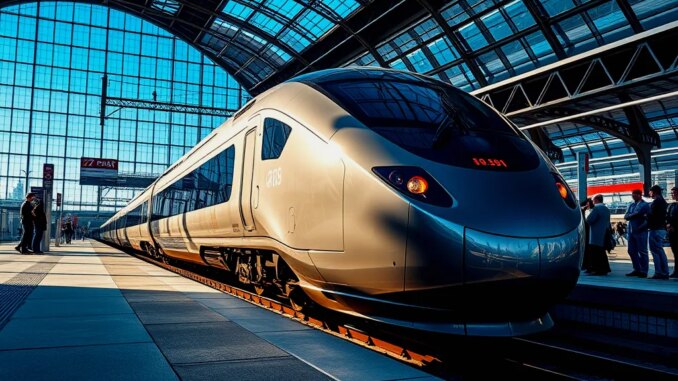
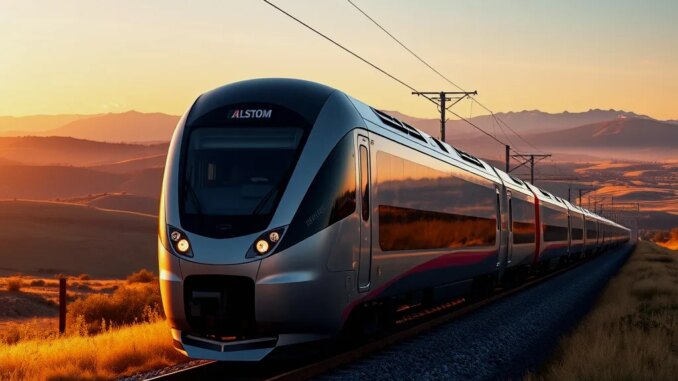
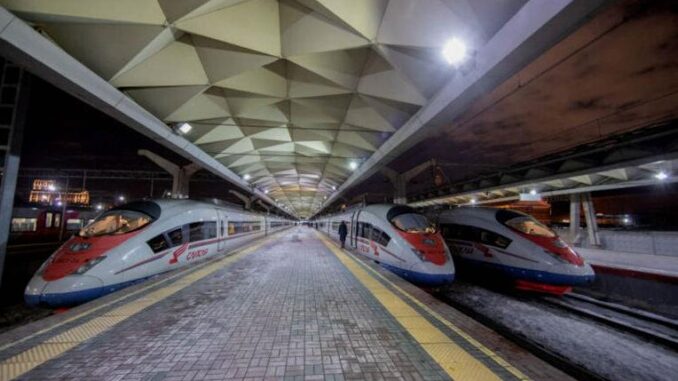
A cornerstone of Russia’s high-speed rail ambitions is the production of entirely domestic train sets. The Ural Locomotive Plant, operated by Sinara Group, is at the forefront of this effort, developing trains that meet international standards for safety, comfort, and performance. These trains are built with a focus on technological independence, utilizing innovative components and systems developed locally.
Preliminary tests show that over half of the critical systems—including propulsion, control, and safety mechanisms—are already in the testing phase within the manufacturing plant itself. The goal is to achieve full operational readiness by 2027, with trains ready for extensive on-track testing. The train sets feature lightweight design elements to maximize energy efficiency and are powered exclusively by electric sources, aligning with Russia’s broader sustainability ambitions.
Technical Specifications and Performance Expectations
The high-speed trains will be capable of reaching speeds up to 400 kilometers per hour, placing them on par with the fastest trains in the world such as Japan’s Shinkansen and France’s TGV. Such velocities will cut the current travel time between Moscow and Sankt-Peterburg from approximately 4 hours to just 2 hours and 15 minutes.
This significant reduction in travel duration addresses one of Russia’s long-standing infrastructure challenges, fostering greater economic integration and easing logistical burdens. The tracks are being designed as double tracks, enabling efficient bi-directional operation and minimal delays, even during peak hours.
Testing and Deployment Timeline
The testing phase is set to begin by the autumn of 2027, focusing on a specially designated segment between Zelenograd and Tver, where various speed tests, safety protocols, and system integrations will be closely monitored. Once confirmed, these trains will undergo comprehensive validation to ensure compliance with all safety and performance standards before full deployment.
By 2028, the high-speed rail line aims to be fully operational, revolutionizing travel between Russia’s two major cities. Officials project that this infrastructure will serve millions of passengers annually, providing a convenient, reliable, and eco-friendly alternative to air and road travel.
Strategic Impact and Future Prospects
Beyond immediate transportation benefits, this project symbolizes Russia’s technological resilience and strategic independence. The emphasis on local manufacturing and engineering sets a precedent for future infrastructure projects, encouraging innovation within Russian industry.
Furthermore, the high-speed rail corridor is expected to stimulate regional economies, attract investments, and promote tourism. The project also opens pathways for future expansions, potentially connecting more cities and integrating with other high-speed networks across Eurasia.
As construction continues to accelerate and technology reaches new benchmarks, Russia’s high-speed rail initiative is poised to transform the transportation landscape, establishing the country as a formidable contender in the realm of rapid, sustainable transit solutions.