Undeniably Groundbreaking: The New Era of Underwater Tunneling Begins
Imagine drilling beneath one of the world’s mightiest rivers—simultaneously constructing two high-speed rail lines with precision and safety. The project’s success hinges on a marvel of engineering: the colossal tunnel boring machine (TBM) named “Linghang”. Recent developments reveal that China has completed the manufacturing of this unprecedented TBM, capable of traversing complex subterranean environments beneath the Yangtze River. This technological leap not only promises faster connectivity but also sets new standards in deep underwater tunnel construction. Here’s an in-depth look at how this giant machine is poised to redefine civil engineering and what it means for China’s infrastructure future.
The Engineering Triumph: Building the Largest TBM in China
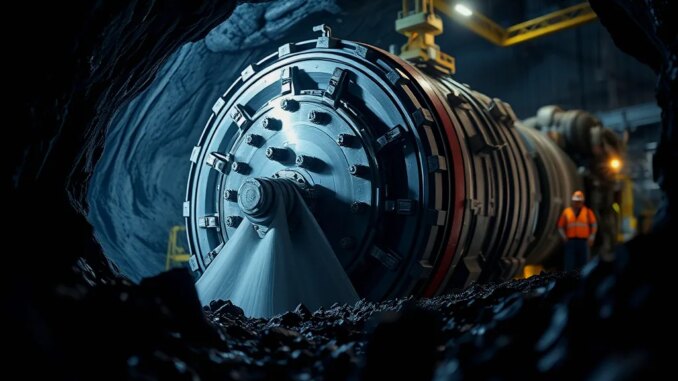
The “Linghang” is a massive feat of engineering innovation. Developed collaboratively by China Railway Engineering Equipment Group and China Railway Tunnel Group, this machine boasts a diameter of 13.72 meters, making it the largest of its kind in China. Its length stretches 145 meters, designed meticulously to accommodate the demanding specifications of crossing beneath the Yangtze River. This TBM’s design entails a dual-layered structure, allowing it to handle high water pressures, complicated geological formations, and the logistical challenges of underwater construction.
Manufactured at a dedicated facility in Hangzhou, Zhejiang Province, the “Linghang” represents years of research, development, and rigorous testing. Its assembly involved integrating cutting-edge cutting tools, hydraulic systems, and automated control systems, ensuring it can operate reliably in one of the most challenging environments known to civil engineers. This level of precision guarantees not just efficient excavation but also safety for workers and the environment.
Underwater Construction in the Yangtze: Challenges and Solutions
The Yangtze River, stretching over 6,300 kilometers, presents formidable obstacles for tunnel construction. Its deep water zones, reaching depths of over 100 meters, contain high water pressures, strong currents, and unpredictable geological conditions such as karst formations and loose sediments. Engineers faced the critical challenge of designing a TBM that could overcome these hazards without risking structural integrity. The solution lay in the TBM’s sophisticated double-layered shield and advanced sealing systems.
This approach ensures that water inflow is managed effectively, preventing flooding during excavation. Additionally, the TBM’s autonomous navigation system maintains precise alignment despite underground magnetic interferences, guaranteeing the tunnel’s accuracy. Once completed, the tunnel will have a depth of approximately 107 meters below sea level, a record that highlights the technical prowess involved.
The Deep Dive: The Construction Process Step-by-Step
- Site Preparation: Engineers conduct detailed geological surveys to map subsurface conditions, identify fault lines, and prepare the site with reinforced access shafts.
- Assembly of TBM: The enormous machine is assembled on-site or transported in sections to the launch site, where it is meticulously installed in the prepared tunnel entrance.
- Excavation and Shielding: The TBM begins to cut through the earth, using rotating cutters to excavate rock and soil. The double-layer shield maintains stability and manages water ingress.
- Segment Ring Installation: As the TBM advances, pre-fabricated tunnel segments are installed to reinforce the tunnel walls, ensuring structural stability during and after construction.
- Spoil Removal and Material Transport: Excavated materials are conveyed along a rotating screw conveyor to a disposal site outside the tunnel, minimizing environmental disruption.
- Machine Maintenance and Support: Continuous monitoring and maintenance optimize efficiency, with onboard systems alerting operators to potential issues.
The Technical Genius Behind the 9” Linghang
Innovations in the TBM’s design include:
- High-pressure water management systems: Handling water pressures up to 1.07 MPa with fail-safe seals.
- Advanced navigation systems: Utilization of GPS, inertial sensors, and underground communication networks to keep the machine on track in real-time.
- Modular cutting heads: Easily adaptable heads for different geologies, boosting versatility across varying subterranean conditions.
- Automated control: Cutting-edge robotics and AI assist in decision-making, reducing human error and increasing success rates.
The Significance of the Underwater Tunnel for China’s Future
Once completed, the Yangtze River The tunnel will become a transportation lifeline, dramatically reducing travel times and boosting regional connectivity. The tunnel will connect Nanjing with other major cities via high-speed rail, directly contributing to economic growth, urbanization, and environmental sustainability by promoting rail transport over road and air travel.
Moreover, this project exemplifies China’s rapid advancements in civil engineering technology, especially in deep underground and underwater construction. It demonstrates the country’s capacity to undertake complex infrastructure projects that meet international standards and set new global benchmarks.
Future Impacts and Potential Innovations
The successful deployment of the “Linghang” paves the way for further innovations in tunneling technology. Engineers are currently exploring enhancements like:
- Self-repairing tunnel segments: Using new materials that can heal minor damages, ensuring longevity.
- Remote operation: Fully autonomous TBMs in scenarios with extreme hazards or inaccessible sites.
- Sustainable construction practices: Minimizing ecological impact through recycled materials and energy-efficient machinery.
Conclusion
The completion of China’s largest underwater boring tunnel machine marks a new chapter in civil engineering. It exemplifies how innovative design, meticulous planning, and technological prowess converge to achieve feats once deemed impossible. As it begins to excavate beneath the Yangtze River, it not only advances China’s infrastructure but also inspires the global engineering community to push the boundaries of what’s achievable beneath the Earth’s surface.
FAQs
Q1: How deep will the Yangtze River tunnel be beneath the riverbed?
It will reach approximately 107 meters below sea level at its deepest point.
Q2: How long will the tunnel be?
The planned length of the tunnel is around 14 kilometers, forming a critical part of a 20.4 km high-speed rail corridor.
Q3: What makes this TBM unique in China?
It is the largest in China by diameter and features advanced double-layer shielding for high-pressure underwater excavation.
Q4: How does this project benefit China?
It will significantly enhance regional connectivity, shorten travel times, stimulate economic growth, and demonstrate China’s engineering capabilities on a global stage.