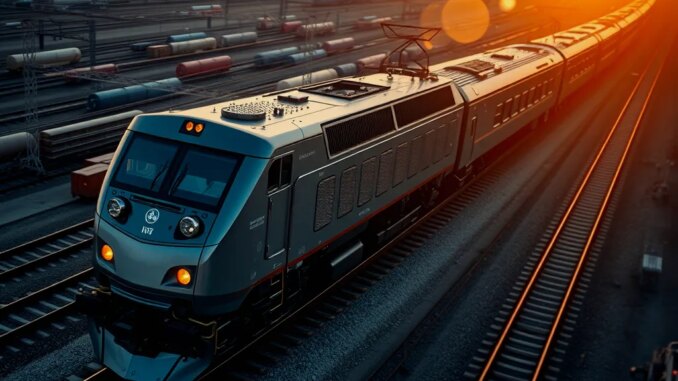
In a pivotal milestone for the future of rail travel in the Pacific Northwest, a massive structural achievement has been realized at King Street Yard, signaling a major upgrade in the region’s rail infrastructure. This accomplishment sets the stage for enhanced service quality, increased capacity, and the integration of cutting-edge technologies in rail maintenance and operations.
The recently completed installation of the final steel beam for the new Maintenance & Inspection (M&I) facility marks the culmination of months of meticulous engineering and teamwork. This state-of-the-art facility is designed to support Amtrak’s expanding fleet, particularly the upcoming Airo trains. Its construction underscores a strategic investment in the region’s transportation infrastructure, aiming to improve reliability and operational efficiency.
Engineers and construction crews worked diligently through every phase of development, managing a vast array of logistical and technical challenges. The project’s scope required the assembly of approximately 1.8 million pounds of structural steel, carefully fitted and secured to form the backbone of the facility. This massive steel framework ensures durability, flexibility, and safety—core requirements for modern rail maintenance plants. In addition, over 12,500 cubic meters of concrete were poured to create robust foundations, platforms, and supporting structures.
As the shell of the building was being assembled, a parallel effort was underway to install sophisticated systems essential for the facility’s operation. From electrical and HVAC to specialized inspection equipment, every component has been integrated with precision. The construction team clocked more than 200,000 hours of work, a testament to the project’s complexity and the commitment of everyone involved.
The Future of Rail Maintenance in the Pacific Northwest
This new rail maintenance hub is more than just a structural milestone; it is a strategic investment aimed at transforming the region’s entire rail network. Scheduled to become operational by late 2026, the facility will serve as a key node within an evolving national maintenance network that prioritizes efficiency, safety, and sustainability.
The centerpiece is the advanced Airo fleet, which requires specialized upkeep to meet high-performance standards. The facility’s modern design includes dedicated tracks, inspection bays, and maintenance areas dedicated to these next-generation trains. This infrastructure will significantly reduce downtime, enabling Amtrak to respond swiftly to maintenance needs, troubleshoot issues more effectively, and uphold superior service standards.
Furthermore, the integration of technology is set to elevate the maintenance process. Smart diagnostics, automated inspection tools, and real-time data monitoring will ensure that potential issues are identified and addressed proactively. This anticipatory approach not only enhances safety but also minimizes operational disruptions, setting a new benchmark in rail maintenance practices.
Strategic Significance and Broader Impact
This development is a cornerstone in realizing broader regional and national goals—reducing carbon emissions by optimizing train efficiency, boosting regional economic growth through improved connectivity, and creating hundreds of skilled jobs during construction and operation phases. As the Pacific Northwest continues to invest heavily in sustainable transportation, this rail hub exemplifies a forward-looking approach to infrastructure development.
In addition, the facility’s design anticipates future expansions, including potential integration with other transit modes such as local light rail or bus services, fostering a seamless multimodal transportation ecosystem. It aligns with national efforts to modernize transportation infrastructure, ensuring that the Pacific Northwest remains competitive and resilient amid evolving mobility demands.
Overall, the completion of the structural framework at King Street Yard signifies a new era in rail services for the region. It embodies a strategic blend of engineering excellence, technological innovation, and forward-thinking planning—elements crucial for maintaining a leading position in sustainable transit solutions.