Transforming Rail Manufacturing with Eco-Friendly Origami Techniques
In the ever-evolving landscape of sustainable transportation, innovative approaches are rewriting how we build and operate trains. A groundbreaking collaboration between Alstom, a global leader in mobility solutions, and Stilfold, a Swedish advanced materials startup, is leading the charge. Their joint effort centers on integrating industrial origami-based manufacturing processes into train component production—promising to drastically reduce carbon emissions, cut material costs, and enhance structural performance.
While traditional manufacturing methods rely heavily on cutting, welding, and assembling thick metal parts, this new approach leverages precise folding of steel sheets, inspired by origami art, to shape complex, high-strength components. The result is not only lighter and more durable train structures but also a significant step toward greener, more resource-efficient transportation systems. This cutting-edge technique could set a new industry standard, helping rail operators meet stricter environmental regulations while maintaining the highest safety and performance standards.
The Science Behind Industrial Origami: Reducing Waste and Increasing Strength
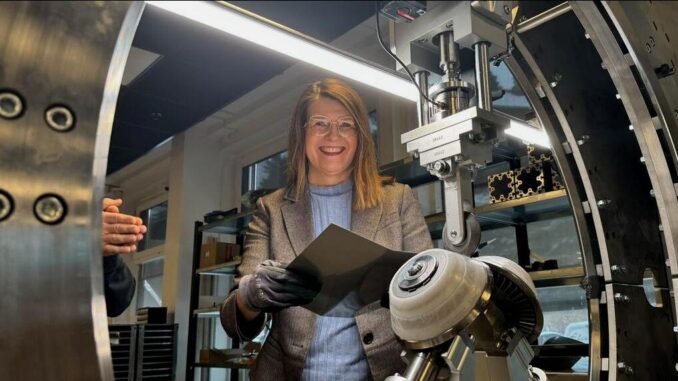
The core of this innovation lies in the controlled bending of flat steel sheets into complex geometries without the need for extensive welding or material removal. This process utilizes advanced robotic folding technology capable of executing precise, repeatable folds at scale. The origami-inspired design distributes mechanical stresses evenly across the component, significantly enhancing its load-bearing capacity while reducing material usage.
One of the key advantages of this method is the minimization of waste during manufacturing. Traditional methods often generate substantial scrap, which not only adds cost but also contributes to environmental degradation. By contrast, Stilfold’s technique maximizes the use of raw materials, enabling more lean production. Additionally, the lightweight nature of these folded components translates into lower energy consumption for trains, further fueling sustainability efforts.
From Pilot to Production: Achieving Feasibility and Scalability
The partnership between Alstom and Stilfold achieved a significant milestone with the successful completion of a series of pilot projects. These prototypes demonstrated that origami-folded steel components meet strict industry safety standards and can withstand the harsh conditions of rail transportation. The real breakthrough was enabling mass production capabilities without sacrificing quality or incurring prohibitive costs.
Moving forward, the companies are now focused on scaling up their processes. This involves refining robotic folding machinery, developing customized design software, and establishing rigorous testing protocols. The ultimate goal is to seamlessly integrate these components into existing manufacturing lines, with the vision of deploying next-generation trains that are lighter, more durable, and environmentally friendly.
Environmental Impact: A New Chapter in Green Transportation
The implications of adopting origami-inspired manufacturing extend well beyond immediate cost savings. By reducing material consumption and energy use, this technology directly contributes to lower greenhouse gas emissions. According to recent studies, lightweight train components can cut fuel consumption by up to 15%, translating into significant environmental benefits over a train’s lifespan.
Moreover, the flexible nature of origami design allows for the creation of more aerodynamic shapes, enhancing speed and efficiency without adding weight. This synergy of performance and sustainability could revolutionize railway networks, especially as countries seek to meet their climate commitments and invest in low-carbon transportation infrastructure.
Design Flexibility and Future Prospects
Beyond the immediate environmental and economic advantages, industrial origami opens up new possibilities for customized, modular train components. Designers can craft complex geometries that were previously impossible or prohibitively expensive with traditional techniques. This enables the production of tailored solutions for diverse routes and operational conditions.
Furthermore, the integration of digital twins and simulation tools allows for virtual testing of folded components before physical manufacturing, minimizing risks and optimizing performance. As the technology matures, we can anticipate its application expanding to other transportation sectors, including automotive and aerospace industries, amplifying its potential impact.
Industry-Wide Impacts and the Path Forward
By pioneering this revolutionary approach, Alstom and Stilfold are setting a benchmark for sustainable industrial innovation. Their collaboration demonstrates the power of blending advanced materials science with cutting-edge robotics and design software. The ripple effect could inspire other manufacturers to explore origami-based manufacturing processes, fostering a broader shift toward green engineering.
This advancement aligns with global efforts to decouple economic growth from environmental impact, providing a scalable model that combines cost efficiency, structural integrity, and sustainability. As governments and private sectors increase their investments in clean transportation, such innovations will become critical to meeting climate objectives while ensuring reliable, safe, and cost-effective mobility solutions for future generations.