Uncovering the Hidden Danger: Wind Turbines and Bird Collisions
Each year, millions of birds fall victim to wind turbines, often because these towering structures blend into the landscape or mimic natural habitats not easily distinguishable by avian eyes. These collisions threaten biodiversity, especially for migratory species that follow specific routes year-round. While wind energy remains a cornerstone of renewable power, scientists and engineers recognize that mitigating bird mortality is critical to making turbines truly eco-friendly.
The Power of Color: Can Paint Save Bird Lives?
Recent groundbreaking research suggests that the solution lies right in our visual perception. Applying specific colors and patterns on turbine blades could serve as visual warnings, effectively deterring birds from reckless collisions. Studies show that certain hues, particularly red, yellow, and black, signal danger or toxicity in the natural world, prompting birds to avoid these signals instinctively. But how practical is this approach? Let’s explore the innovative experiments transforming this idea into viable conservation technology.
How Researchers Conducted Groundbreaking Experiments
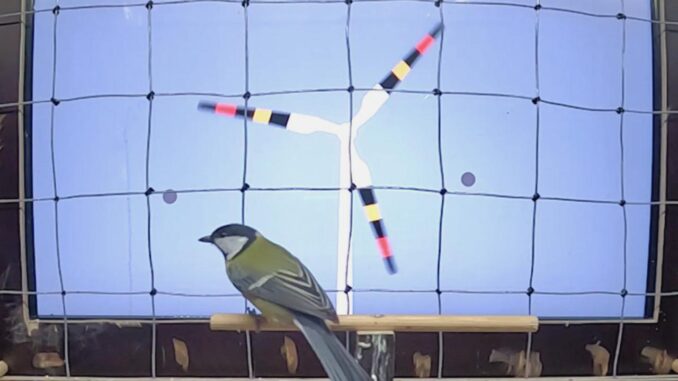
Scientists at the University of Helsinki and the University of Exeter designed experiments involving digital simulations to assess bird reactions to various turbine blade colors and patterns. They created an interactive touchscreen setup where birds, specifically large songbirds like the Eurasian blackbird, interacted with virtual turbine images displaying differing color schemes and movements.
In these tests, birds learned to associate certain visual cues with rewards, then were exposed to rotating turbines with different designs. The goal? Determine which patterns significantly reduce the approach and collision risk by triggering innate avoidance behaviors. For example, turbines featuring bold red stripes, black-and-yellow markings, or high-contrast patterns elicited more significant avoidance responses than plain white blades.
Why Colors Like Red, Yellow, and Black Are Effective
In nature, warning coloration or *aposematism* helps species signal danger to predators, and birds have evolved to recognize these cues. Red often indicates toxicity or danger, yellow signals caution, and black provides high contrast against backgrounds. When these colors are applied to wind turbine blades, birds interpret the signals as hazards or threats, causing them to change course or become more cautious.
Studies further reveal that patterns such as stripes or checkered designs amplify this effect, creating a visual barrier or warning sign that determines bird approach. These visual cues are especially critical during migration seasons, when birds travel at night or through foggy conditions, relying heavily on instinct and visual signals to avoid obstacles.
Implementing Coloration Strategies on Real-World Turbines
Transforming this research into practical solutions involves painting or applying decals to existing turbines and those under construction. Here’s a step-by-step overview:
- Assessment of Location: Identify high-risk migration corridors, especially near wetlands, forests, or coastal areas where bird activity is intense.
- Design Selection: Choose high-contrast, warning-based patterns, focusing on colors like red, yellow, and black with distinct stripes or checkers.
- Application Process: Use durable, weather-resistant paints or films designed for outdoor conditions to ensure longevity.
- Monitoring and Evaluation: Employ radar, camera traps, and bird observation to track changes in collision rates post-implementation.
- Iterative Optimization: Adjust patterns and colors based on real-world data, optimizing for maximum deterrence.
Cost-Effectiveness and Long-Term Benefits
Compared to other mitigation methods like radar detection systems or shutdown procedures, applying visual deterrents on turbine blades offers a cost-effective, low-maintenance solution with long-lasting effects. A single application of high-quality paint or decals can reduce bird collisions significantly, translating to savings for energy companies and preservation of local wildlife.
Limitations and the Future of Bird-Friendly Wind Energy
While promising, the color and pattern approach may not eliminate all bird collisions, especially during high migration peaks or foggy conditions where visibility is reduced. Integrating multiple mitigation strategies, such as shutting down turbines during peak migration and installing acoustical deterrents, can enhance effectiveness. Furthermore, ongoing research aims to refine patterns, colors, and materials to maximize deterrence without affecting turbine efficiency or aesthetics.
Conclusion: A Visual Revolution in Wind Energy Conservation
Applying warning colors and patterns to wind turbine blades represents a game-changing approach to reducing avian mortality while harnessing renewable energy. It combines natural animal instincts with innovative design, offering a practical, scalable solution that could complement existing mitigation measures. Embracing such visual deterrence methods can make wind farms safer ecosystems — for birds and humanity alike — without sacrificing clean energy goals.