The Growing Financial Strain on Russia’s Space Sector
Russia’s once celebrated space program now grapples with a profound economic downturn, a consequence of international sanctions, war-related sanctions, and a shrinking global partnership network. Despite official statements suggesting resilience, internal data reveals significant setbacks that threaten Russia’s long-term space ambitions.
Impact of Sanctions and War on Space Operations
Post-Ukraine invasion, Western countries and allies have imposed stringent sanctions targeting Russia’s key technological sectors, including space technology. This has led to the suspension of collaborations with major entities like ESA, NASA, and private firms that previously relied on Russian launch vehicles. The immediate effect: a decrease in the number of successful launches, with a notable drop from an average of 17 annually to less than 10 in recent years.
Decline in Revenue and Economic Challenges
Loss of international clients results in multimillion-dollar revenue shortfalls. Russian space agency Roscosmos has reported a revenue decline of nearly $2.5 billion since 2020. This financial crunch forces a reevaluation of strategies and resource allocation, highlighting the necessity of alternative income streams.
Innovative Revenue Generation: Advertising on Rockets
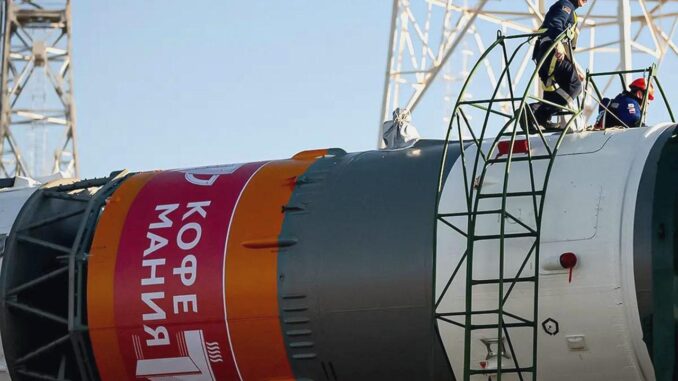
In a bid to offset dwindling budgets, Roscosmos launches a pioneering approach—selling advertising space on rockets and spacecraft. This unconventional method draws inspiration from 1990s commercial ventures, such as Pepsi and Pizza Hut campaigns on space stations and rockets.
Under this scheme, companies can display logos or messages on rocket shells. Vladimir Putin approved this move, allowing state-funded missions to incorporate corporate advertising, a first in Russia’s space history. While lucrative in concept, advertising contracts are modest, generating only a few million dollars annually—insufficient to counteract the massive economic losses caused by the sanctions and war.
The Shift in Russian Space Strategy and Operations
With international partnerships fractured, Roscosmos accelerates its internal restructuring. The agency extends ISS crew missions from six to eight months, aiming to maximize the utility of existing assets amid declining launch frequencies. This cost-cutting measure reduces operational expenses but also limits Russia’s role in international projects.
Furthermore, the number of space launches has fallen sharply. From a consistent 17 or more annually in previous years, recent figures show a decline to fewer than 10 launches per year. This reduction jeopardizes Russia’s position as a leading launch provider and threatens its broader space ambitions.
Revolutionizing Cost-Management and Innovation Efforts
The economic pressures compel Russian space officials to revisit cost-reduction methods and technological innovation. Initiatives such as developing smaller, more efficient rockets, and public-private partnerships are gaining traction. However, these efforts face significant hurdles due to outdated infrastructure, brain drain, and limited access to advanced technology.
Conclusion: Navigating Uncertain Future for Russian Space Program
Despite its historic achievements, Russia’s space sector now confronts a crisis of viability. The combination of economic setbacks, international isolation, and declining launch capabilities necessitates a radical transformation. While innovative approaches like advertising might offer short-term relief, the long-term health of Russia’s space program hinges on strategic partnerships, technological modernization, and sustainable funding models—yet these are increasingly difficult under current global circumstances.